What is BIM and why are 3D Building Models transforming construction?
In this blog we will answer not just 'what is BIM?', but how 3D Building Models are created from reality capture data, how they differ from older methods, and more.
In the modern built environment, understanding ‘what is BIM?’ and how 3D Building Models are created is no longer a luxury. This transformation impacts the way buildings are designed, constructed and managed.
Building Information Modelling, usually referred to simply as BIM, represents a shift away from traditional drawings and static plans towards a living, data-rich digital replica of a building.
Combined with advanced surveying methods like laser scanning, BIM is now central to how architects, engineers, contractors and owners collaborate, reduce risk and deliver value throughout the lifecycle of a built asset.
In this blog we will answer not just ‘what is BIM?’, but how 3D Building Models are created from reality capture data, how they differ from older methods, why they are so powerful in planning and delivery, and where this technology is heading.
Understanding the basics: What is BIM?
At its core, BIM stands for Building Information Modelling. It is a digital representation of the physical and functional characteristics of a building or infrastructure asset. This goes far beyond a two-dimensional plan or even a simple 3D visual. A BIM model contains geometry, spatial relationships and not just visual details but also information about materials, performance, quantities and much more.
According to international standards, the purpose of BIM is to use a shared digital model to support decision-making across design, construction and operation of the built asset. This means that every discipline involved, from structural engineers and architects to services designers and main contractors, works from a single model that evolves as the project develops.
This shared model becomes the authoritative record for a building’s lifecycle, from initial planning right through to maintenance and eventual refurbishment or demolition.
The evolution from drawings to digital twins
Traditionally, buildings were represented by a set of drawings – plans, elevations and sections – produced on paper. These two-dimensional representations were essential but limited in how they conveyed information about a structure.
Computer-aided design (CAD) improved this by allowing digital drafting, and 3D CAD added visual depth. But 3D CAD models remain largely graphical and lack intelligence about what they represent. BIM changes this entirely. A BIM model is not just a picture it is a digital twin. It is a rich database that:
Understands what each element is (for example a wall or a window)
Knows how elements relate to each other
Contains information about materials, measurements and performance
Can be analysed for cost, schedule and sustainability outcomes
Imagine, instead of dozens of separate files, you have one dynamic digital model that responds and updates when a change is made. Change a wall material once and every related view, schedule and report updates automatically. This is the power of BIM.
Introducing 3D Building Models
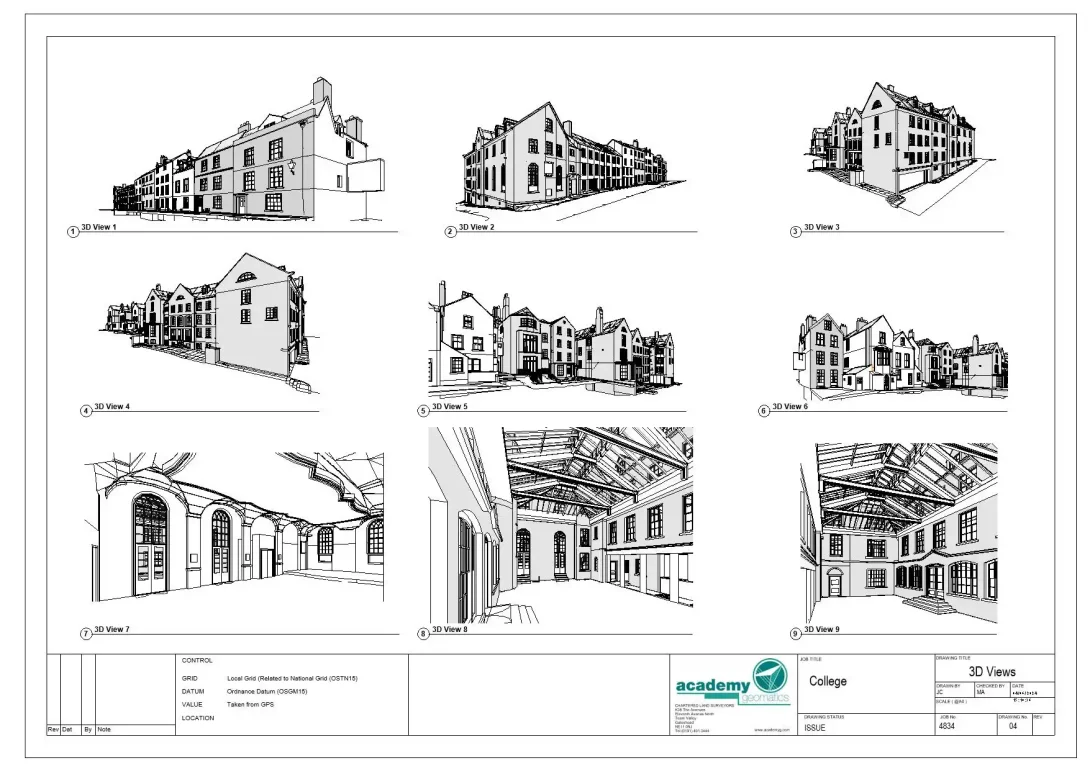
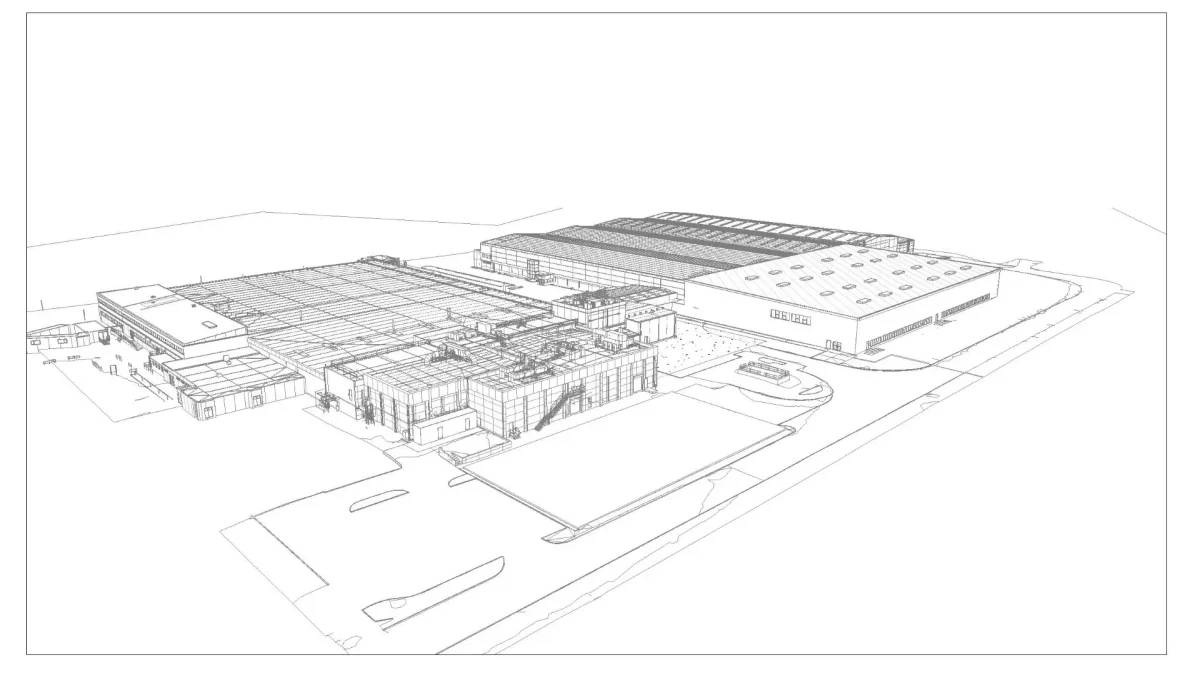
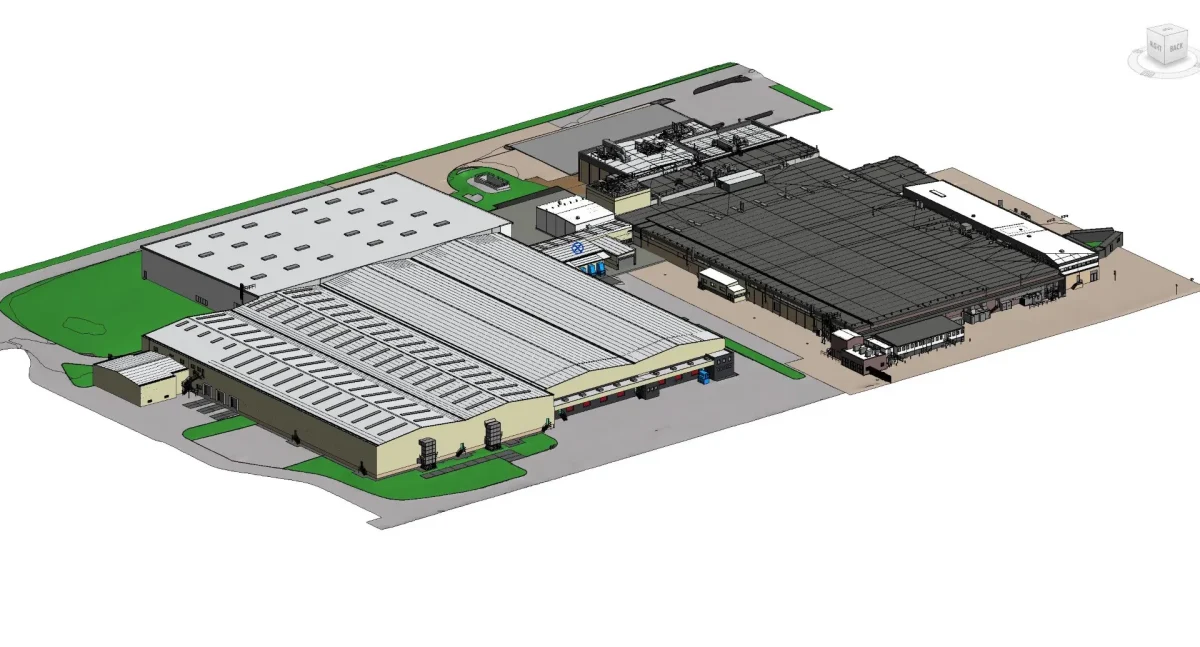
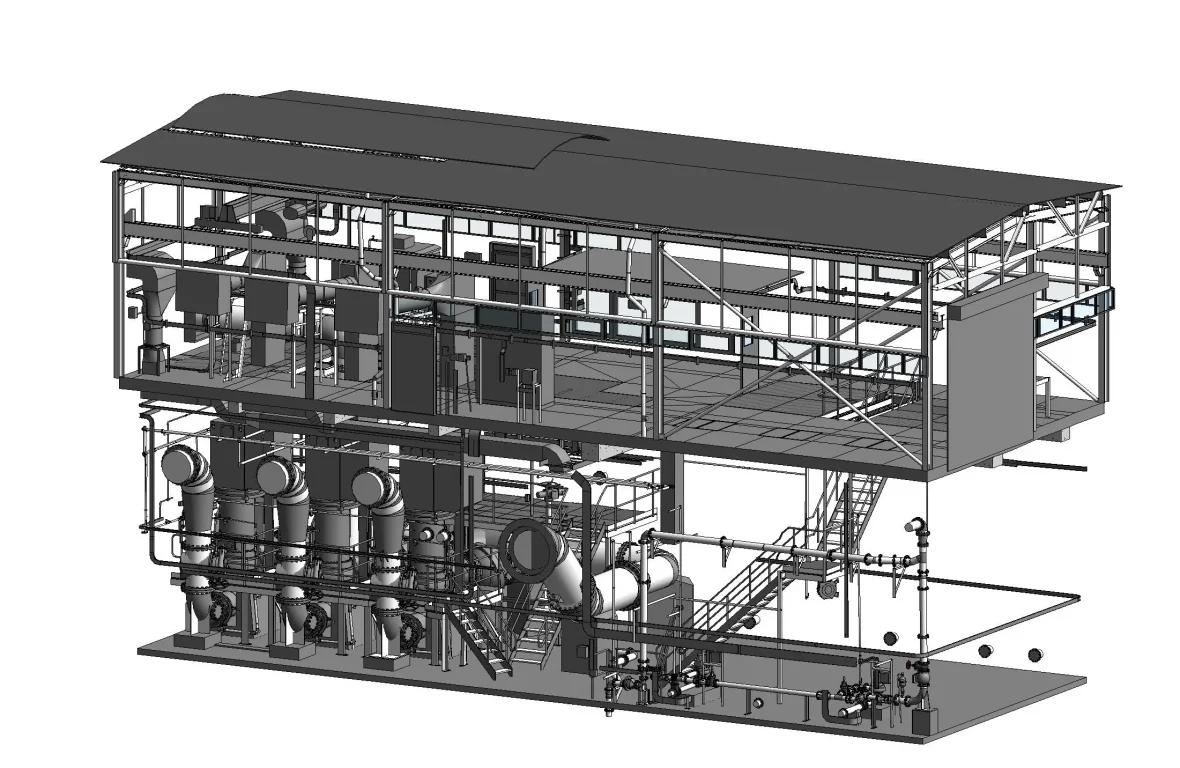
When most people think of BIM, they usually imagine a 3D Building Model. While BIM can include information in many dimensions (such as time for construction sequencing or cost for financial planning), 3D is the essential foundation.
3D Building Models are exactly what they say they are – digital three-dimensional representations of a building’s physical structure and spaces. They are:
Geometrically accurate
Spatially coherent
Rich in data
Usable across disciplines
These models allow stakeholders to visualise what the building will be like in real space. But beyond visualisation, a 3D BIM model holds metadata about components, performance characteristics and relationships between systems. This means the model becomes a working tool for design, construction planning and facilities management.
How are 3D BIM Models created? Traditional vs scan to BIM
There are essentially two routes to a BIM model:
Design-led BIM, where the model is built from scratch in authoring software such as Autodesk Revit or Bentley
Scan to BIM, where reality capture is used to generate a BIM model from an existing building
The second approach is especially relevant when working with existing structures.
What is Scan to BIM?
Scan to BIM is the process of using advanced surveying technology to capture an existing building’s true physical attributes and convert that captured data into a BIM model. This workflow bridges the physical and digital worlds.
It begins with 3D laser scanning or other reality capture technologies such as photogrammetry. A laser scanner emits a rapid series of light pulses that bounce back from surfaces. Each return is recorded as a three-dimensional coordinate point. Millions or even billions of these points form a point cloud which is the raw digital capture of the built space.
This point cloud contains the shape, size and location of walls, floors, ceilings, openings and any architectural feature. The data is then processed, cleaned and imported into BIM authoring software where skilled professionals translate point clouds into actionable BIM elements.
This conversion step takes a set of unstructured points and interprets them into structured 3D Building models.
Why Scan to BIM is important
Scan to BIM has become indispensable for many types of projects, particularly:
Refurbishment and retrofit: Where existing information is incomplete or inaccurate
Heritage conservation: Ensuring historic features are captured in detail before work begins
Facility management: Creating accurate as-built records for operations
Clash detection and coordination: Revealing spatial conflicts between services and structures early on
In projects without reliable existing documentation, traditional surveys are time consuming and prone to error. Scan to BIM replaces guesswork with precision and creates a single source of truth.
The technical workflow of Scan to BIM
The scan to BIM workflow can be broken into several key stages:
Project planning and definition: Agreeing scope, accuracy requirements and deliverables
Reality capture: Using laser scanners to capture point clouds of the existing building
Data processing and registration: Merging multiple scans into a single coherent dataset
Modelling to BIM: Converting the point cloud into a structured 3D building information model
Quality control and validation: Checking the model for accuracy and completeness
Each of these stages requires expertise in both surveying and BIM modelling, and close communication between surveyors and designers.
The benefits of BIM and 3D Building Models
The value of BIM and 3D Building models extends beyond design visuals to tangible improvements in project outcomes. Some of the key benefits include:
Improved collaboration
A BIM model acts as a shared knowledge resource. All teams – structural, mechanical, architectural and contractor – work with the same up-to-date information. This avoids version confusion and reduces miscommunication.
Enhanced accuracy and reduction of errors
BIM keeps information consistent across all views and reports. Tools such as clash detection automatically identify conflicts between building systems long before they reach site, reducing costly rework.
Cost and time savings
Because changes in a BIM model ripple through everything that depends on them, errors are caught early. This means fewer surprises on site, more accurate quantity take-offs and better forecasting of costs.
Better visualisation and insight
A 3D Building model brings a design to life in a way that 2D drawings never can. Stakeholders, including those without technical expertise, can better understand spaces, sequences and interfaces.
Lifecycle asset management
Once construction finishes, a BIM model does not lose relevance. It becomes a valuable tool for facilities managers who need accurate records of what is built, where elements are located and how systems connect. This helps with planned maintenance, performance tracking and future alterations.
Uses beyond construction
BIM is not just for new builds and refurbishment. Its applications continue into the operation and management of buildings long after they are completed. Facility managers use BIM for:
Space utilisation planning
Energy performance analysis
Maintenance scheduling
Compliance tracking
Meanwhile, in sectors like healthcare, education and commercial property, BIM underpins decisions about upgrades, safety and accessibility.
Challenges and considerations
While BIM and Scan to BIM offer huge benefits, they are not without challenges.
Data files from laser scanning can be enormous and require careful handling to avoid performance issues on computers. Choosing the right Level of Detail (LOD) for a project is also crucial. Too much detail can waste time and budget, while too little can miss important features.
Also, converting point clouds into accurate BIM models requires technical skill and quality control. Misinterpreted data can lead to model errors just as easily as manual surveys, so expert oversight is essential.
The future of 3D Building Models and BIM
Looking ahead, advancements in automation and artificial intelligence are beginning to support Scan to BIM processes, reducing the hours of manual input once required. Research is promising improved algorithms for converting unstructured point clouds into structured BIM elements, potentially streamlining workflows and making BIM modelling even more accessible.
As BIM continues to mature, its role in sustainable design, digital twins, predictive maintenance and smart cities will only grow.
Final thoughts
Now that we understand ‘what is BIM?’ and the role of 3D Building models, it is essential for anyone involved in the built environment. BIM is more than a modelling tool. It is a process that underpins collaboration, simplifies complexity and drives better outcomes from conception through to operation.
At its heart, BIM represents a digital transformation – one that replaces fragmented information with a cohesive, intelligent model that tells the full story of a building. When combined with advanced surveying techniques like Scan to BIM, the result is a highly accurate, data-rich 3D representation that becomes invaluable throughout a building’s lifecycle.
Whether you are planning a new build, managing a historic structure or looking to improve facilities management, BIM and 3D Building models are tools that can dramatically improve clarity, reduce risk and unlock greater value from every stage of your project. If you still have any questions about this cutting-edge technology, please don’t hesitate to contact our team.